Smolensk has a war history that is far more significant than its size would suggest. In September 1943, it was a key to Soviet Red Army strategy, and for the German defence.
The best English-language podcast for staying up to date on the war in Ukraine is Ukraine: The Latest from the Daily Telegraph. Its creator and executive producer was David Knowles, who passed away unexpectedly in September.
My condolences and sympathies to Mr. Knowles’ family, friends, co-workers and colleagues.
Map 1: Battle of Smolensk, 1943

Map 2: Red Army map for Operation Suvorov

Smolensk is at the upper left, along the leftmost vertical line. In Cyrillic, it looks like “CMOLEHCK,” and is the convergence of three red arrows from the east, and the divergence of three more red arrows going west.
Map 3: Smolensk region

This gives you an idea of where the smaller towns are in relation to Smolensk.
Historical photos

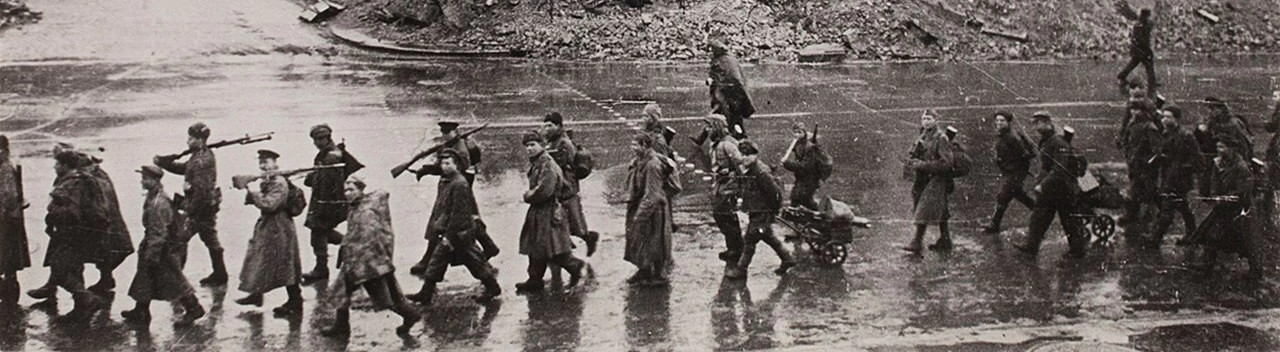
Smolensk after the battle, 1943

Gen. Yeremenko (right) with Nikita Khrushchev (left) during the Battle of Stalingrad.

Yeremenko in about 1970

Gen. Vasily Sokolovsky in 1946
Sources:
Antony Beevor, The Second World War. London, UK: Little, Brown and Co., 2012.
Robert Forczyk, Smolensk 1943: The Red Army’s Relentless Advance. Oxford, UK: Osprey Publishing, 2019.
Evan Mawdsley, Thunder in the East: The Nazi-Soviet War, 1941–1945. London: Bloomsbury Academic, 2016.
Anthony Tucker-Jones, Slaughter on the Eastern Front: Hitler and Stalin’s War 1941–1945. Stroud, Gloucestershire, UK: The History Press, 2017
Wikipedia: https://en.wikipedia.org/wiki/Smolensk_operation.